
When you bite down, your upper and lower teeth should meet in a way that allows you to chew comfortably. But what if some of the teeth do not touch when someone bites down, even when their back teeth are closed?
This is called an open bite, and it is one of the bite problems we evaluate at Orthodontic Specialists in St. George.
An open bite may be noticeable when you smile, but its effects can go beyond appearance. Depending on which teeth are affected, it can make biting into food difficult and sometimes interfere with speech.
Dr. Jeff Erickson examines how your teeth and jaws fit together to determine what is causing the problem and whether orthodontic treatment can help.
What Does an Open Bite Look Like?
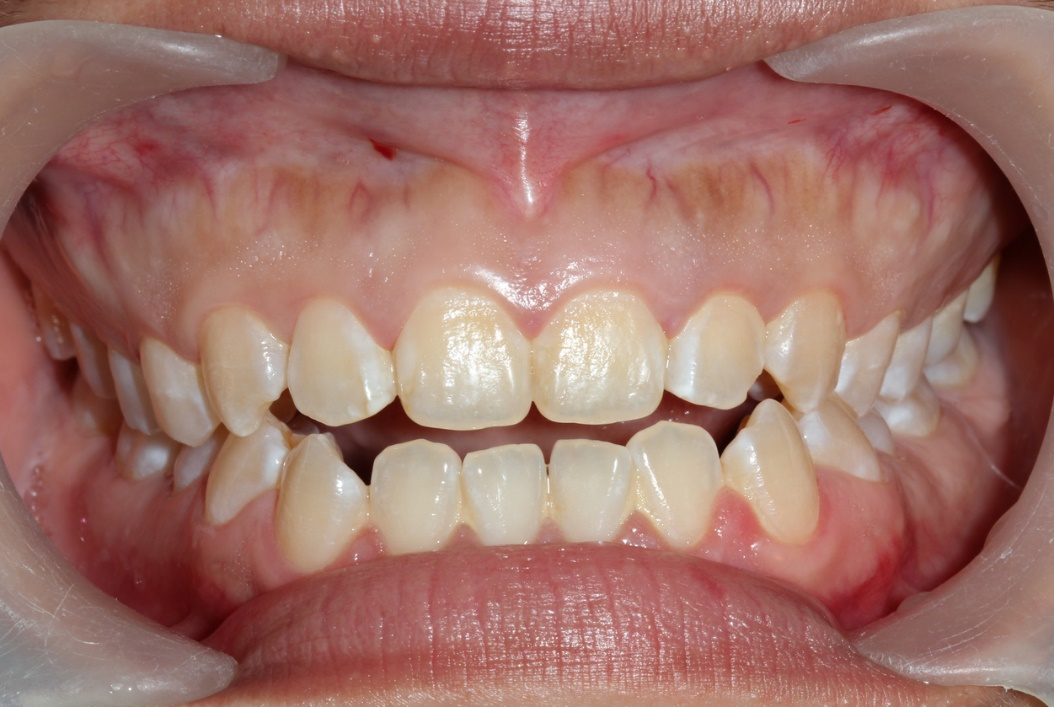
An open bite occurs when certain upper and lower teeth do not make contact when you bite down.
There are two main types:
- Front (anterior) open bite: The front teeth do not touch when the back teeth are together. This can make it difficult to bite into foods such as sandwiches or apples.
- Back (posterior) open bite: Some of the back teeth do not meet when the mouth closes, which can affect chewing.
The gap may be small or quite noticeable, depending on which teeth are affected and the severity of the open bite. Some patients have a small gap between their front teeth, while others have a more noticeable separation.
During an orthodontic examination, Dr. Erickson looks at more than the visible gap. He also evaluates how the teeth fit together and whether the position of the jaws contributes to the problem.
What Causes an Open Bite?
Open bites can develop for several reasons, and identifying the cause is an important part of planning treatment.
Common contributing factors include:
- Thumb or finger sucking: Prolonged habits can affect the position of developing teeth and the way the jaws grow.
- Tongue posture or pressure: The tongue’s resting position or repeated pressure against the teeth may contribute to an open bite.
- Jaw growth patterns: Differences in how the upper and lower jaws develop can prevent certain teeth from meeting properly.
- Tooth eruption problems: Teeth that do not erupt into their expected positions can leave gaps in the bite.
Sometimes more than one factor is involved.
We do not assume that every open bite has the same cause or that the same treatment will work for everyone. Understanding why the teeth are not meeting helps Dr. Erickson determine which options are appropriate.
How an Open Bite Can Affect Oral Health
An open bite is more than a cosmetic concern. As the American Association of Orthodontists explains, teeth that do not meet properly can affect chewing and contribute to other dental problems.
Whether treatment is necessary depends on the severity of the open bite and how it affects everyday function.
For example, a front open bite can make it difficult to bite through food with the front teeth. Some people compensate by using their side teeth or changing how they bite into certain foods.
An open bite may also contribute to speech difficulties, particularly with sounds that require precise tongue and tooth positioning.
In children, an open bite may change as the teeth and jaws develop. Oral habits, such as thumb sucking, can also influence whether the condition improves or becomes more pronounced.
At Orthodontic Specialists, we consider these functional concerns along with appearance when discussing whether treatment is recommended.
How Can Orthodontic Treatment Correct an Open Bite?
There is no single treatment that works for every open bite. The appropriate approach depends on the patient’s age, the position of the teeth, jaw relationships, and the cause and severity of the problem.
Braces
Braces can move teeth into better positions and help correct certain open bites. Depending on the treatment plan, Dr. Erickson may use additional orthodontic components to guide tooth movement and improve how the teeth meet.
Clear Aligners
Clear aligners may be an option for some patients with open bites. However, their suitability depends on the movements required and the complexity of the bite problem.
Dr. Erickson can explain whether aligners are appropriate or whether braces would provide better control for the recommended treatment.
Addressing Habits That Affect the Bite
For children whose open bite is associated with thumb sucking or another persistent oral habit, addressing that habit may be an important part of care.
In some cases, an open bite caused by a habit may improve after the habit stops, particularly while a child is still growing. Other patients may need orthodontic treatment to correct the remaining tooth positions.
When Should an Open Bite Be Evaluated?
For children, the timing of an evaluation depends partly on whether the open bite is associated with an oral habit, such as thumb sucking, or with the way the teeth and jaws are developing. Some open bites improve as children grow, while others require treatment.
Adults can also benefit from an examination, even if they have had an open bite for years.
Consider scheduling an appointment if:
- The upper and lower front teeth do not meet when the back teeth are closed.
- Biting through certain foods is difficult.
- Chewing is difficult because some of the back teeth do not meet properly.
Dr. Erickson can determine whether the open bite requires treatment, what options are available, and what results may reasonably be expected.
Schedule an Open Bite Evaluation at Orthodontic Specialists
At Orthodontic Specialists, Dr. Erickson evaluates your bite, explains what he finds, and discusses whether treatment is appropriate. Our office offers complimentary consultations, so you can learn about your options before making a decision.
Concerned about an open bite in yourself or your child? Contact Orthodontic Specialists in St. George to schedule a complimentary consultation. Dr. Erickson will examine the bite, explain his findings, and discuss whether orthodontic treatment is recommended.